UNIT – 1 Centres of origin, distribution of species, wild relatives in different cereals; pulses; oilseeds; fibres; fodders and cash crops; vegetable and other horticultural crops of kharif season;
UNIT – 2 Plant genetic resources, its utilization and conservation, study of genetics of qualitative and quantitative characters; Important concepts of breeding self-pollinated, cross-pollinated and vegetatively propagated crops.
UNIT – 3. Major breeding objectives and procedures including conventional and modern innovative approaches for development of hybrids and varieties for yield, adaptability, stability, abiotic and biotic stress tolerance and quality (physical, chemical, nutritional);
UNIT – 4. Hybrid seed production technology in maize, rice, sorghum, pearl millet and pigeopea etc. Ideotype concept, climate resilient crop varieties for future.
- Teacher: Dr. Prafull Kumar
Unit 1: Greenhouse Technology
Unit 2: Greenhouse Equipment and Materials
Unit 3: Irrigation Systems Used in Greenhouses
Unit 4: Drying and Dehydration
Unit 5: Material Handling Equipment
- Teacher: Twinkle Thapa
COURSE OUTCOME
CO 1. Understanding the nature of damage and seasonal incidence of insect pests.
CO 2. Describing major pests of horticultural and plantation crops regarding the extent and nature of loss, seasonal history, their integrated management.
CO 3. Analyzing the techniques for mass multiplication of natural enemies will be known.
CO 4. Evaluating the loss to major field crops and their effective management by different methods.
COURSE CONTENT
Theory
Importance of beneficial Insects, Beekeeping and pollinators, bee biology, commercial methods of rearing, equipment used, seasonal management, bee enemies and disease. Bee pasturage, bee foraging and communication.
Role of pollinators in cross pollinated plants.
Types of silkworm, voltinism and biology of silkworm.
Mulberry cultivation, mulberry varieties and methods of harvesting and preservation of leaves. Rearing, mounting and harvesting of cocoons. Pest and diseases of silkworm, management, rearing appliances of mulberry silkworm and methods of disinfection.
Species of lac insect, morphology, biology, host plant, lac production – seed lac, button lac, shellac, lac- products. Identification of major parasitoids and predators commonly being used in biological control.
Insect orders bearing predators and parasitoids used in pest control and their mass multiplication techniques. Important species of pollinator, weed killers and scavengers with their importance.
- Teacher: Vikas Gautam
CO 1: Understanding micro propagation of horticultural crops.
CO 2: Describing types of poly houses and shade net houses will be known.
CO 3: Analyzing high tech nursery management in horticultural crops.
CO 4: Applying remote sensing and Geographical Information System (GIS).
Theory
Introduction & importance; Nursery management and mechanization; micro propagation of horticultural crops;
Modern field preparation and planting methods, Protected cultivation: advantages, controlled conditions, method and techniques.
Micro irrigation systems and its components; EC, pH based fertilizer scheduling, canopy management, high density orcharding,
Components of precision farming: Remote sensing, Geographical Information System (GIS), Differential Geo-positioning System (DGPS).
Variable Rate applicator (VRA), application of precision farming in horticultural crops (fruits, vegetables and ornamental crops); mechanized harvesting of produce.
PRACTICAL
· Types of poly houses and shade net houses, Intercultural operations, tools and equipments identification and application,
· Micro propagation, Nursery- trays, micro-irrigation, EC, pH based fertilizer scheduling, canopy management,
· Visit to hi-tech orchard/nursery.
- Teacher: Vibhu Pandey
Unit I – Introduction to Farm Management Meaning and concept of farm management; objectives and relationship with other sciences. Meaning and definition of farm; types and characteristics of farms; factors determining type and size of farms.
Unit II – Production Economics and Cost Concepts Principles of farm management; production function and its types; application in farm decision-making. Factor-product, factor-factor and product-product relationships; opportunity cost and comparative advantage. Cost concepts; estimation of farm income measures.
Unit III – Farm Business Analysis and Records Farm income, profitability, efficiency measures. Farm records, inventory, balance sheet and profit & loss account.
Unit IV – Farm Planning and Risk Management Farm planning, budgeting, linear programming. Risk, uncertainty and insurance in agriculture.
Unit V – Resource Economics Natural resource economics, externalities and common property resources.
1. OBJECTIVES
General Objective:
To develop conceptual and analytical understanding of farm management, production economics and resource use for efficient farm decision-making.
Specific Objectives:
· Understand principles and scope of farm management.
· Apply production economics concepts to farm decision-making.
· Analyze farm costs, income and profitability.
· Prepare farm plans and budgets.
· Evaluate risk, uncertainty and resource use in agriculture.
- Teacher: Dr. Avinash Mishra
CO 1. Understanding rainfed agriculture and watershed farming.
CO 2. Describing Drought: types, effect of water deficit on physio-morphological characteristics of the plants will be known.
CO 3. Analyzing soil & moisture conservation measures can be known.
CO 4. Evaluating the efficient utilization of water through soil & crop management practices.
- Teacher: Ajay Kumar Baheliya
COURSE OUTCOME
CO 1. Understanding various post harvest techniques of food materials.
CO 2. Describing basic concepts of processing in operating various units.
CO 3. Analyzing problems in post harvest engineering of food grains.
CO 4. Evaluating the processing of a wide range of food products.
COURSE CONTENT
Theory
Importance of post-harvest processing of fruits and vegetables, extent and possible causes of post harvest losses; Pre-harvest factors affecting postharvest quality, maturity, ripening and changes occurring during ripening; Respiration and factors affecting respiration rate. Harvesting and field handling; Storage (ZECC, cold storage, CA, MA, and hypobaric); Value addition concept; Principles and methods of preservation; Intermediate moisture food- Jam, jelly, marmalade, preserve, candy.Concepts and Standards; Fermented and non-fermented beverages. Tomato products- Concepts and Standards; Drying/ Dehydration of fruits and vegetables. Concept and methods, osmotic drying. Canning -– Concepts and Standards, packaging of products.
- Teacher: Akash Shukla
Centers of origin, distribution of species, wild relatives in different cereals; pulses; oilseeds; fodder crops and cash crops; vegetable and horticultural crops. Plant genetic resources, its utilization and conservation.
Study of genetics of qualitative and quantitative characters; Major breeding objectives and procedures including conventional.
Modern innovative approaches for development of hybrids and varieties for yield, adaptability, stability, abiotic and biotic stress tolerance and quality (physical, chemical, nutritional).
Hybrid seed production technology of rabi crops. Ideotype concept and climate resilient crop varieties for future.- Teacher: Dr. Prafull Kumar
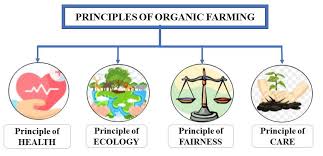
Organic farming, principles and its scope in India; Initiatives taken by Government (central/ state).
NGOs and other organizations for promotion of organic agriculture.Organic ecosystem and their concepts; Organic nutrient resources and its fortification; Restrictions to nutrient use in organic farming; Choice of crops and varieties in organic farming.
Fundamentals of insect, pest, disease and weed management under organic mode of production; Operational structure of NPOP.
Certification process and standards of organic farming; Processing, leveling, economic considerations and viability, marketing and export potential of organic products.
- Teacher: Durgesh Nandn
|
COURSE CODE |
COURSE TITLE |
L |
T |
P |
C |
|
BSA 306 |
DISEASES OF FIELD AND HORTICULTURAL CROPS AND THEIR MANAGEMENT-II |
2 |
0 |
2 |
3 |
COURSE OUTCOME
CO 1. Understanding plant diseases and plant pathogens.
CO 2. Describing the classification and life cycle of plant pathogens.
CO 3. Analyzing Chemical nature, mode of action of different fungicide, Physical and bio-control measures will be known by students.
CO 4. Evaluating the management of diseases in crops and specimens storing will be gained.
COURSE CONTENT
Theory
Symptoms, etiology, disease cycle and management of following diseases: Field Crops: Wheat: rusts, loose smut, karnal bunt, powdery mildew, alternaria blight, and ear cockle.
Sugarcane: red rot, smut, wilt, grassy shoot, ratoon stunting and PokkahBoeng; Sunflower: Sclerotinia stem rot and Alternaria blight; Mustard: Alternaria blight, white rust, downy mildew and Sclerotinia stem rot; Gram: wilt, grey mould and Ascochyta blight; Lentil: rust and wilt.
Cotton: anthracnose, vascular wilt, and black arm; Pea: downy mildew, powdery mildew and rust.
Horticultural Crops: Mango: anthracnose, malformation, bacterial blight and powdery mildew; Citrus: canker and gummosis; Grape vine: downy mildew, Powdery mildew and anthracnose;
Apple: scab, powdery mildew, fire blight and crown gall; Peach: leaf curl. Strawberry: leaf spot Potato: early and late blight, black scurf, leaf roll, and mosaic; Cucurbits: downy mildew, powdery mildew, wilt; Onion and garlic: purple blotch, and Stemphylium blight; Chillies: anthracnose and fruit rot, wilt and leaf curl.Turmeric: leaf spot Coriander: stem gall Marigold: Botrytis blight; Rose: dieback, powdery mildew and black leaf spot.
|
UNIT |
TOPICS TO BE COVERED |
LECTURES REQUIRED |
|
UNIT – 1 |
Symptoms, etiology, disease cycle and management of following diseases: Field Crops: Wheat: rusts, loose smut, karnal bunt, powdery mildew, alternaria blight, and ear cockle. |
6 |
|
UNIT – 2 |
Sugarcane: red rot, smut, wilt, grassy shoot, ratoon stunting and PokkahBoeng; Sunflower: Sclerotinia stem rot and Alternaria blight; |
5 |
|
Mustard: Alternaria blight, white rust, downy mildew and Sclerotinia stem rot; Gram: wilt, grey mould and Ascochyta blight; Lentil: rust and wilt. |
3 |
|
|
UNIT - 3
|
Cotton: anthracnose, vascular wilt, and black arm; Pea: downy mildew, powdery mildew and rust. |
3 |
|
UNIT-4
|
Horticultural Crops: Mango: anthracnose, malformation, bacterial blight and powdery mildew; Citrus: canker and gummosis; Grape vine: downy mildew, Powdery mildew and anthracnose |
5 |
|
UNIT-5
|
Apple: scab, powdery mildew, fire blight and crown gall; Peach: leaf curl. Strawberry: leaf spot Potato: early and late blight, black scurf, leaf roll, and mosaic; Cucurbits: downy mildew, powdery mildew, wilt; Onion and garlic: purple blotch, and Stemphylium blight; Chillies: anthracnose and fruit rot, wilt and leaf curl. Turmeric: leaf spot Coriander: stem gall Marigold: Botrytis blight; Rose: dieback, powdery mildew and black leaf spot. |
9 |
PRACTICAL
· Identification and histo-pathological studies of selected diseases of field and horticultural crops covered in Course Content: Theory.
· Field visit for the diagnosis of field problems.
· Collection and preservation of plant diseased specimens for herbarium.
|
EXERCISE |
PRACTICAL EXERCISE |
LECTURES REQUIRED |
|
1 |
Identification and histo-pathological studies of selected diseases of field and horticultural crops covered in Course Content: Theory. |
6 |
|
2 |
Field visit for the diagnosis of field problems. |
5 |
|
3 |
Collection and preservation of plant diseased specimens for herbarium. |
5 |
Note: Students should submit 50 pressed and well-mounted specimens.
TEXT BOOK
Jagtap, G. (2012).Diseases of Horticultural Crops and their Management.
REFERENCE BOOK
Ali Anwar and Sharma, P.K. (2008). Disease Mangament in Horticultural Crops.
- Teacher: Satish Chand